
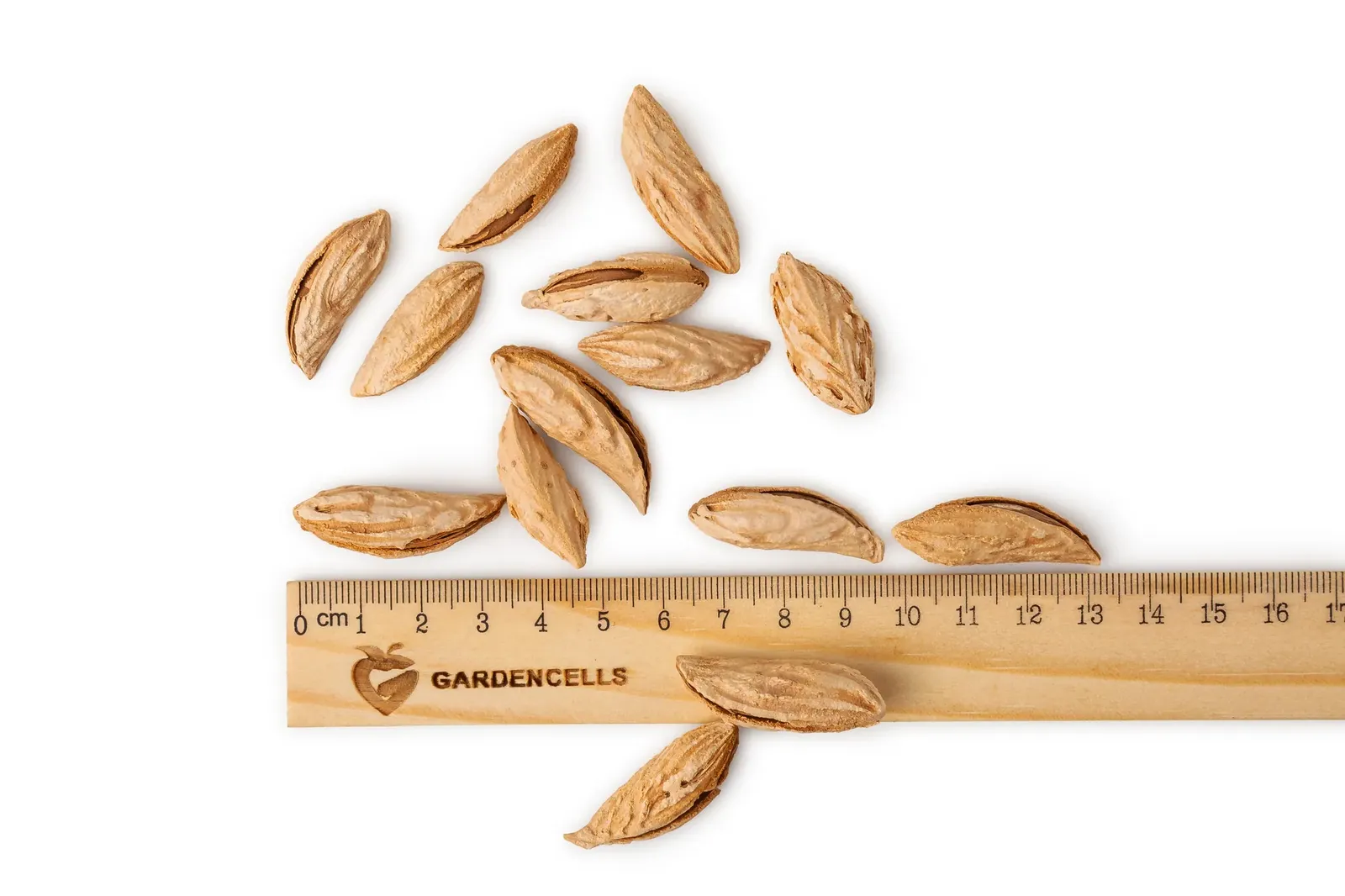
Almonds “Sword”
Description
1. How it is grown and harvested: Almonds have been cultivated in Central Asia since ancient times, and wild almond species still grow on the region’s mountain slopes. Long, hot, dry summers, mild winters and well-drained stony soils are ideal for almond trees, and they give the nuts a sweet, concentrated flavour. Sword almonds (Kilich) are a traditional almond variety of Uzbekistan, named for the long, narrow, blade-like shape of the nut. The trees are grown in the sunny foothill orchards, and the nuts are harvested in late summer when the hulls open, then hulled and dried naturally. The kernel is long and slender, with a sweet, delicate almond flavour that reflects the hot, dry growing conditions of the foothills.
2. Processing and packaging details: The almonds are cleaned, sorted and checked for empty, damaged or defective nuts and foreign material. They are packed in export bags or cartons that keep them dry and protected. Each lot is checked for kernel fill and taste before packing. Store almonds in a cool, dry place (ideally below 15 °C), away from light and strong odours. In-shell almonds keep their quality for up to 12–18 months; kernels for around 12 months in closed packaging. Each lot can be supplied with export documentation, including a phytosanitary certificate and certificate of origin, on request.
3. Health benefits and nutrition: Sword almonds provide vitamin E, magnesium, calcium, plant protein, dietary fibre and healthy monounsaturated fats. Contains tree nuts. Regular moderate consumption of almonds is associated with a heart-friendly diet, and their protein and fibre help keep you full between meals. Sword almonds are appreciated by customers who know local varieties and are used as a snack, in markets and in cracking for kernels. Because of their distinctive shape, Sword almonds look attractive in mixed nut assortments and gift packs, and their kernels can be roasted, salted or used in baking. They are also suitable for light roasting with salt in the shell, a popular way of serving almonds with tea in Central Asia, and their slender kernels look elegant when sliced or slivered for decorating cakes and pastries.
Nutrition facts
per 100 gTypical values per 100 g of kernels (shell removed). No added salt or sugar.