
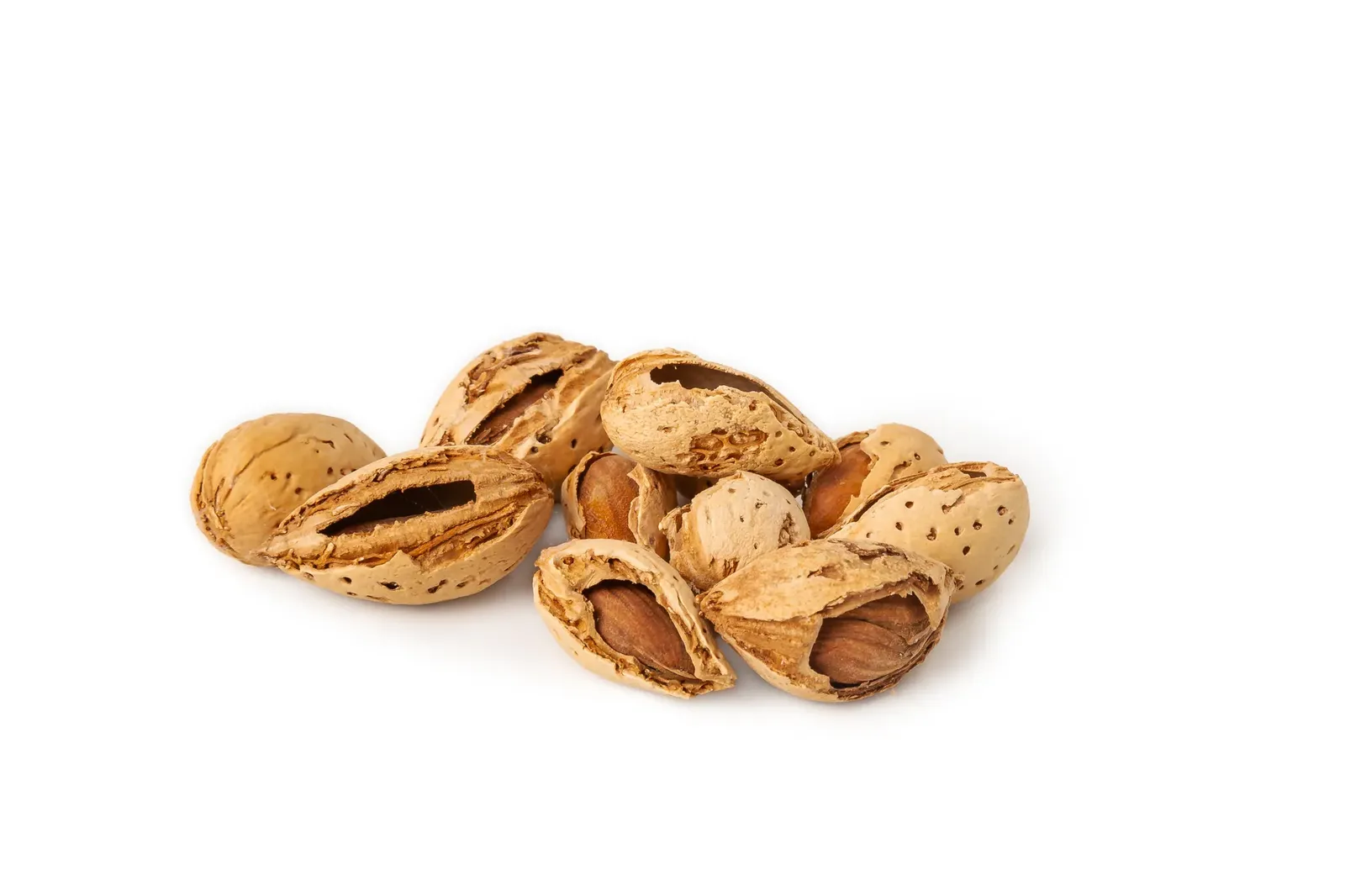
Almonds “Hard Cracking”
Description
1. How it is grown and harvested: Almonds have been cultivated in Central Asia since ancient times, and wild almond species still grow on the region’s mountain slopes. Long, hot, dry summers, mild winters and well-drained stony soils are ideal for almond trees, and they give the nuts a sweet, concentrated flavour. Hard-cracking almonds are grown in the orchards and foothills of Uzbekistan. Their thick, hard shell protects the kernel well, which makes them very durable in storage. The nuts are harvested in late summer when the hulls open, then hulled and dried naturally in the sun. Hard-shelled almond types are traditional in the region because they are well adapted to the climate and protect the kernel from pests and moisture. The trees are hardy and productive, and they grow well on slopes and foothills where many other crops struggle.
2. Processing and packaging details: The almonds are cleaned, sorted and inspected to remove empty, damaged or defective nuts and foreign material. They are packed in export bags suitable for bulk transport and long-term storage. Their strong shell makes them less sensitive to transport and humidity than soft-shell types, which is an advantage for long supply chains. Store almonds in a cool, dry place (ideally below 15 °C), away from light and strong odours. In-shell almonds keep their quality for up to 12–18 months; kernels for around 12 months in closed packaging. Each lot can be supplied with export documentation, including a phytosanitary certificate and certificate of origin, on request.
3. Health benefits and nutrition: Inside the hard shell is a nutritious kernel rich in vitamin E, magnesium, calcium, plant protein, fibre and healthy fats. Contains tree nuts. Almonds are associated with a heart-friendly diet, and their protein, fibre and healthy fats give lasting energy. Almonds are a satisfying, nutrient-dense snack, and a small handful provides lasting energy. Hard-cracking almonds are mainly supplied to processors and cracking plants for kernel production, and to wholesale markets. After cracking, the kernels are used for snacking, roasting, baking, confectionery and almond butter.
Nutrition facts
per 100 gTypical values per 100 g of kernels (shell removed). No added salt or sugar.