
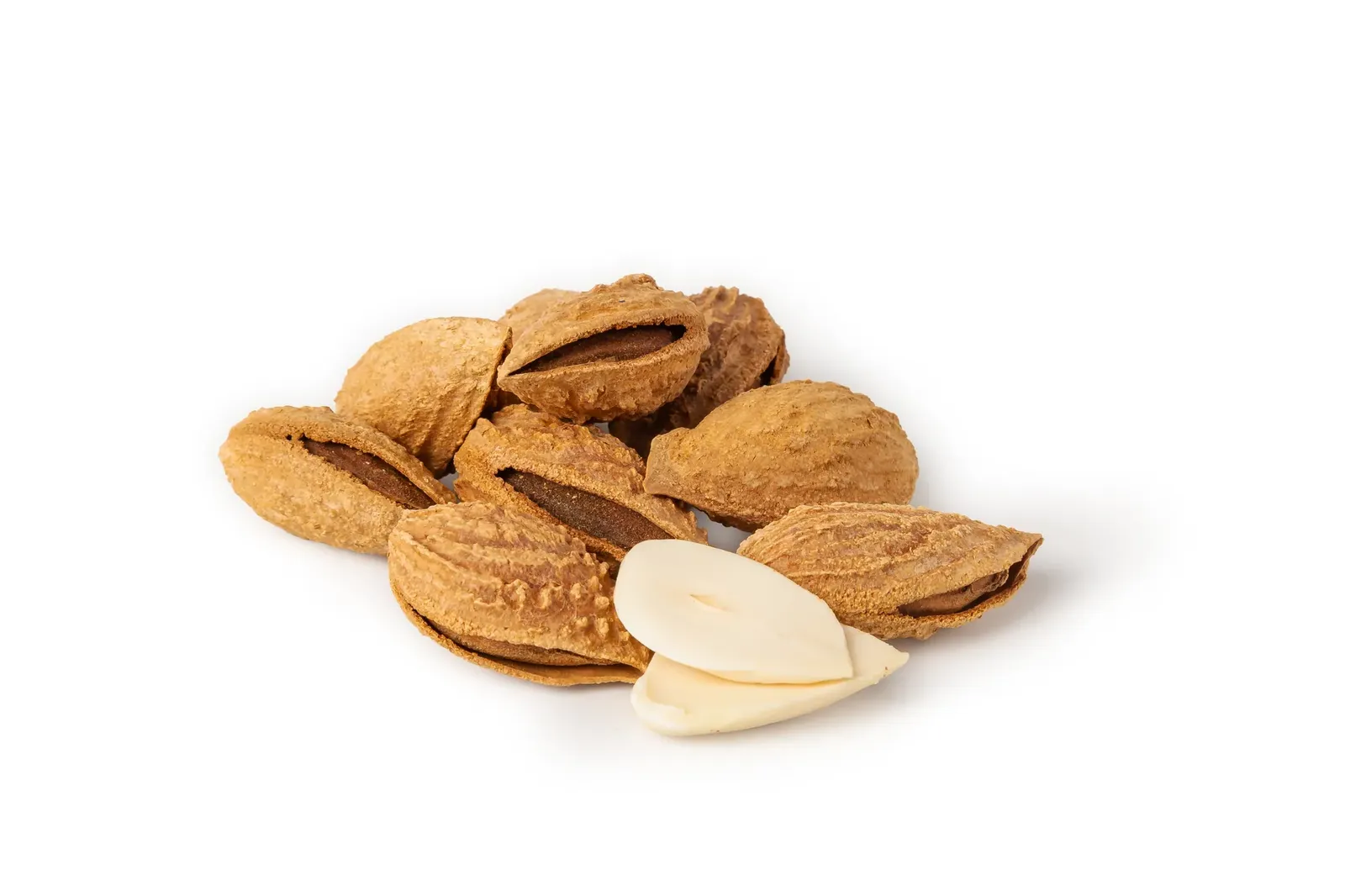
Almonds “Dot”
Description
1. How it is grown and harvested: Almonds have been cultivated in Central Asia since ancient times, and wild almond species still grow on the region’s mountain slopes. Long, hot, dry summers, mild winters and well-drained stony soils are ideal for almond trees, and they give the nuts a sweet, concentrated flavour. Dot almonds (Kongiz, meaning “beetle”, after their small rounded shape) are a traditional local variety grown in the orchards of Uzbekistan. The nuts are harvested in late summer, hulled and dried naturally in the sun. They are small and compact, with a dense, flavourful kernel. Kongiz is one of the old local almond types that has been kept by growers for its taste and adaptability to the region’s climate.
2. Processing and packaging details: The almonds are cleaned, sorted and inspected to remove empty, damaged or defective nuts and foreign matter, then packed in export bags or cartons that keep them dry. This variety is available in limited volumes. Each lot is checked for kernel fill and taste before packing, as local varieties can vary from season to season. Store almonds in a cool, dry place (ideally below 15 °C), away from light and strong odours. In-shell almonds keep their quality for up to 12–18 months; kernels for around 12 months in closed packaging. Each lot can be supplied with export documentation, including a phytosanitary certificate and certificate of origin, on request.
3. Health benefits and nutrition: Dot almonds offer vitamin E, magnesium, calcium, plant protein, fibre and healthy fats in a small, convenient nut. Contains tree nuts. Their protein and fibre make them filling, so a small handful is a satisfying and healthy snack between meals. Almonds are associated with a heart-friendly diet, and their combination of protein, fibre and healthy fats provides steady energy. Dot almonds are mainly sold to customers familiar with local varieties, for snacking, markets and speciality retail. Their small, even size also makes them suitable for roasting and for traditional sweets in which whole almonds are used. Customers familiar with Central Asian almonds often look specifically for local types such as Kongiz for their characteristic taste.
Nutrition facts
per 100 gTypical values per 100 g of kernels (shell removed). No added salt or sugar.